Resources: Food Insecurity And Eating Disorders
13/10/26
Food insecurity occurs when an individual or household has limited or uncertain access to sufficient, safe and nutritious food. According to a June 2025 survey conducted by the Food Foundation, almost six million adults in the UK experienced food insecurity, equivalent to approximately 11.3% of households. Our work in EDIFY has highlighted that clinicians perceive food insecurity to be an increasing concern (Kuehne et al., 2024). Our research has also shown that children growing up with food insecurity are more likely to develop disordered eating in adolescence than those from food-secure households (Trompeter et al., 2026). Finally, we have shown in a survey of people with lived experience of both food insecurity and eating disorders that food insecurity can contribute to the development of an eating disorder for some, while for others, it can worsen existing symptoms or trigger their recurrence (Bryson et al., 2026). It is therefore essential to adapt eating disorder screening, assessment, treatment and support to help people cope with food insecurity.
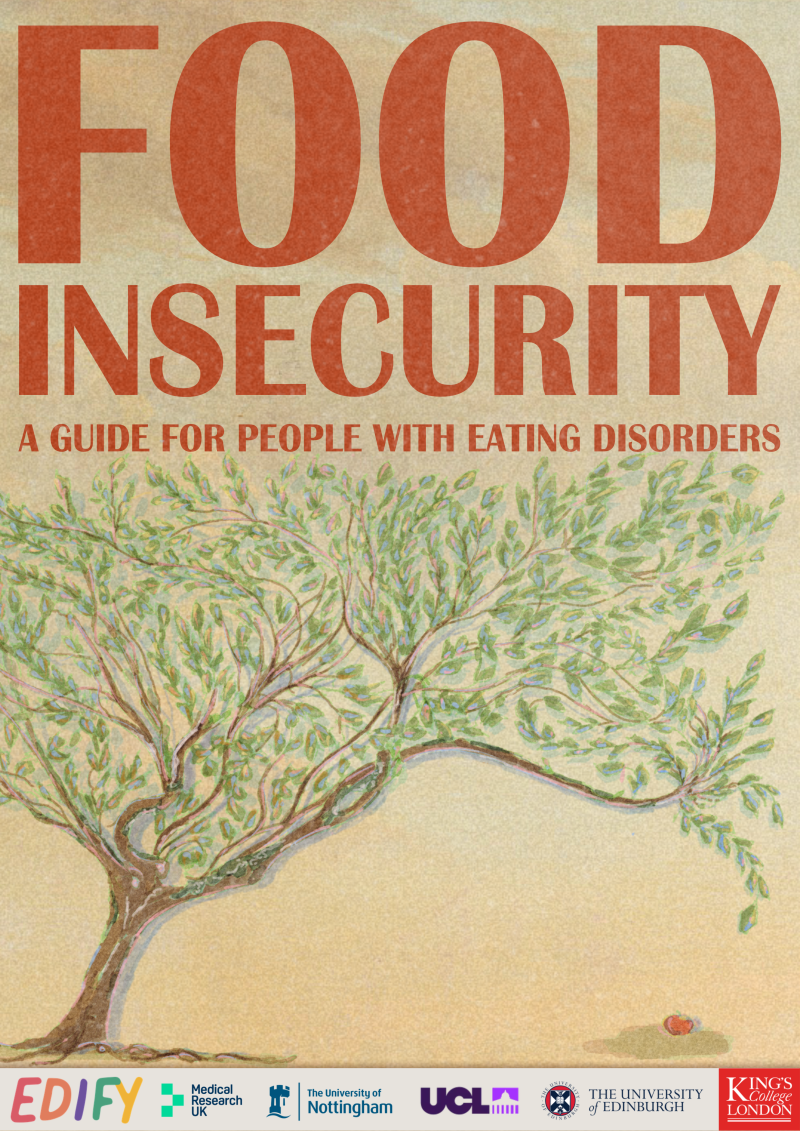
In response to this urgent need, we have developed three resources on food insecurity and eating disorders as part of a project funded by Medical Research UK. These are:
1) Information leaflet exploring the lived experiences of people affected by both eating disorders and food insecurity, the evidence linking these experiences, and how to access support. Digital Version (Printable Version)
2) Guidance for healthcare professionals on screening for and identifying food insecurity among people with eating disorders. Digital Version
3) Recommendations for adapting eating disorder treatment to meet the needs of people with current or past experiences of food insecurity. Digital Version
If you access any these resources, we would be grateful if you could complete our short feedback survey: https://qualtricsxmsqqtmlmmw.qualtrics.com/jfe/form/SV_8lgCDV8fh6FjfD0
Share